The Secret Math Behind Your Favorite Video Games
A different angle on math tutoring in Green Bay: from trigonometry in bullet paths to geometry in 3D worlds, see the real math powering the games teens play…
A different angle on math tutoring in Green Bay: from trigonometry in bullet paths to geometry in 3D worlds, see the real math powering the games teens play daily.
Introduction
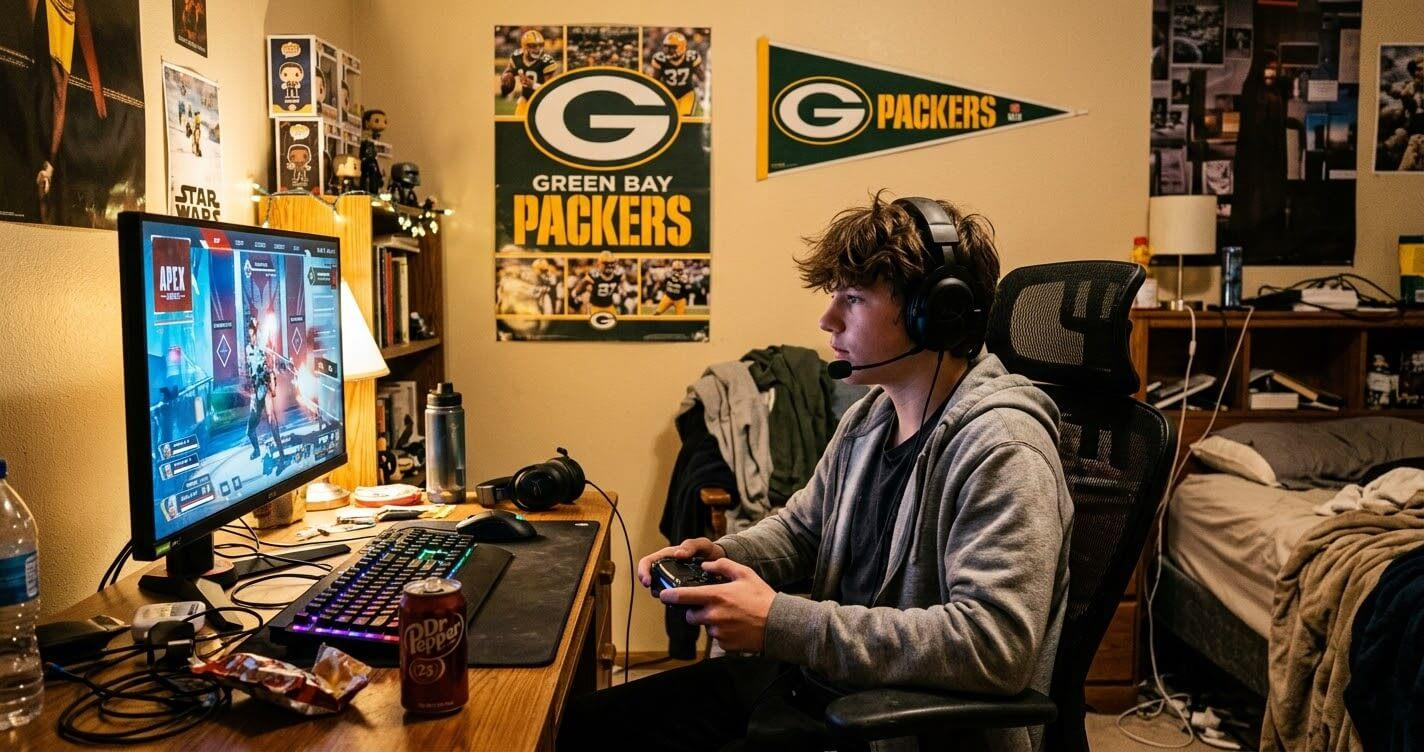
If a student ever tells us math is boring, there’s a decent chance they spent last night playing a game built almost entirely out of math in video games. Most of the math holding a game together is invisible on purpose, which is exactly why it’s the kind of example we bring up in math tutoring in Green Bay whenever a student needs convincing.
Every Jump and Bullet Path? That’s Trigonometry.
Game designers use sine, cosine, and tangent to calculate the exact angle and arc of everything from a jump to a bullet's flight path.
That satisfying arc when a character jumps over a gap, or the way a thrown grenade curves before it lands, isn’t guesswork. It’s the same trig functions from a high school unit circle, just running thousands of times per second. Even the camera swinging smoothly around a character
during a cutscene is calculated using angles and rotation formulas that come straight out of a trigonometry textbook.
Why NPCs Seem “Smart”? Blame Probability.
Non-player characters make decisions using probability and decision trees, mapping out possible outcomes before picking the “smartest” move.
Game AI relies heavily on probability and algorithms to simulate believable enemy behavior and pathfinding, the same branch of math used to calculate loot drop rates and matchmaking. An enemy that seems to “predict” where you’re going to run isn’t reading your mind, it’s running a quick probability calculation based on your last few moves and picking the statistically likeliest option.
That Satisfying 3D World? Thank Geometry.
Every 3D character and environment is built from coordinates, vectors, and matrices, the geometry unit most students breeze past without realizing where it leads.
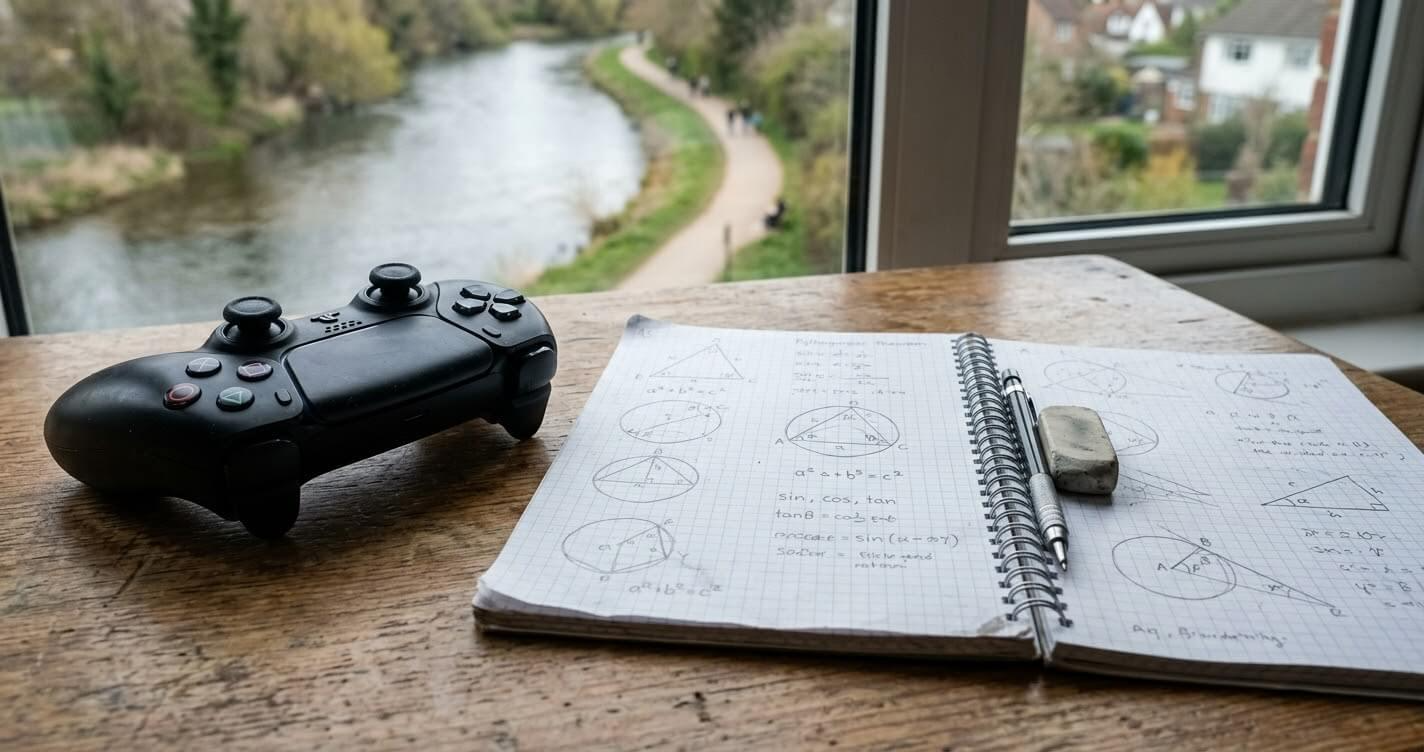
Rotating a character, zooming a camera, or rendering realistic lighting all come down to transforming points in space, exactly what’s happening in a geometry class, just rendered at sixty frames per second instead of on graph paper. Even something as simple as a character’s shadow stretching correctly across uneven ground is a geometry calculation happening in real time, adjusting constantly as the character moves.
So Should Gamers Take Math More Seriously?
If a student is even a little interested in how games are built, geometry and algebra stop being abstract and start being the actual toolkit.
We’ve had more than one student light up the moment they realized the math they were avoiding is the same math behind the games they love. That connection alone has turned around a few report cards, mostly because it flips the question from “when will I ever use this” to “wait, this is how that works?”, and that second question tends to keep students engaged a lot longer than the first one ever did.
To Conclude
Even students who have zero interest in becoming a game developer tend to sit up a little straighter once they realize the math in front of them isn’t just theoretical. It’s the same reasoning behind something they already spend hours enjoying, which makes the whole subject a lot easier to take seriously. It’s exactly the kind of angle we lean on in high school math help, and one more reason math tutoring in Green Bay doesn’t have to feel like extra homework.