The Hidden Math Behind How Your GPS
A look at math tutoring in Green Bay from an unexpected angle: the graph theory and algorithms behind how GPS apps find and reroute your drive.
Reroutes You in Traffic
A look at math tutoring in Green Bay from an unexpected angle: the graph theory and algorithms behind how GPS apps find and reroute your drive.
Introduction
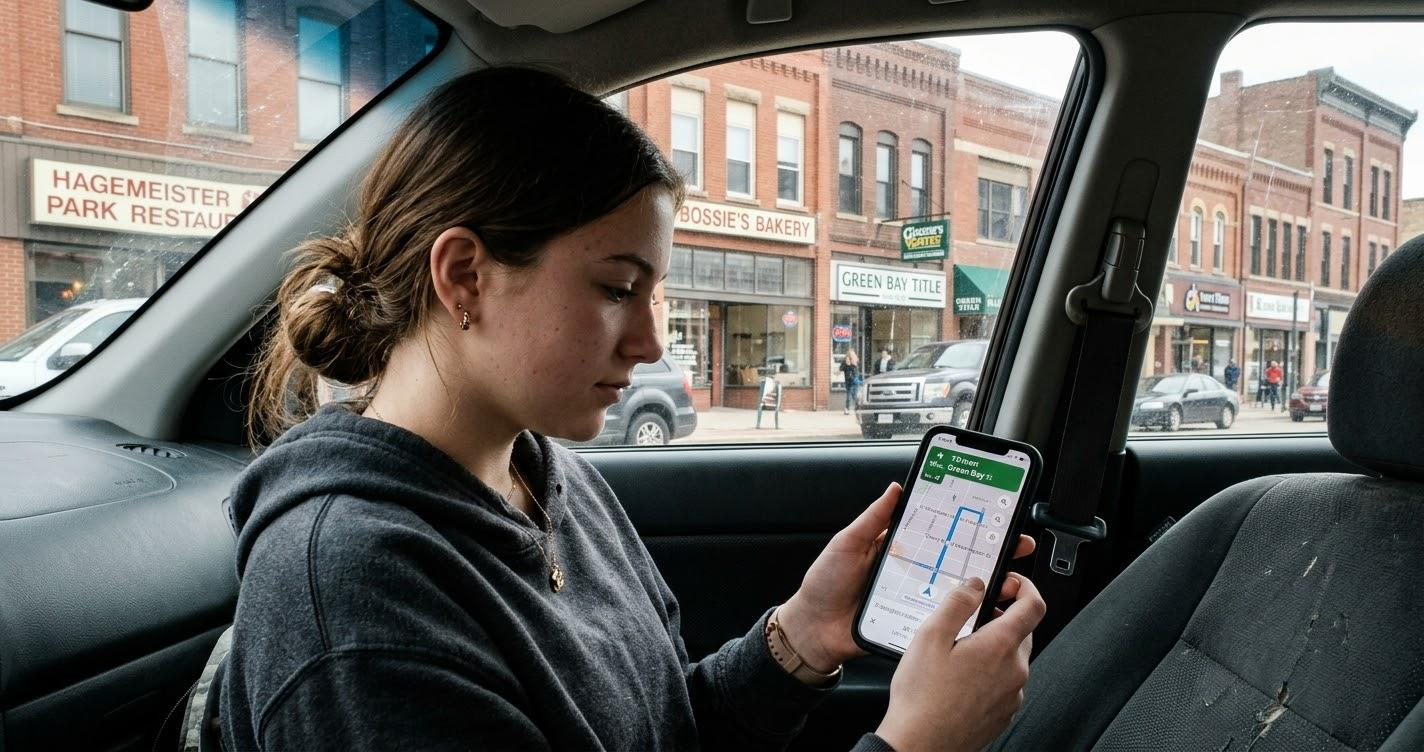
Your phone says “rerouting” and just like that, a new path appears. That’s not a lucky guess, it’s math running in the background, and it's the kind of math tutoring in Green Bay example that turns heads once students realize what's actually happening.
Your Phone Is Secretly Solving a Graph Problem
Navigation apps treat every intersection as a point and every road as a connection between points, then hunt for the shortest path through that entire network.

Mathematicians call this structure a graph, just dots (called nodes) and lines connecting them (called edges), each edge carrying a “cost” like distance or expected drive time. Once the road map becomes a graph like this, finding the fastest route turns into a very specific, very solvable math problem.
This isn’t a small graph, either. A city the size of Green Bay turns into thousands of nodes and edges once every intersection and side street gets mapped out, and a cross-country trip balloons that number into the millions. The math has to stay fast even as the graph gets enormous.
The Algorithm That Started It All
Most GPS systems trace back to a method called Dijkstra’s Algorithm, which finds the cheapest path through a graph one step at a time.
Developed in 1956 by computer scientist Edsger Dijkstra, the algorithm works by constantly asking “what’s the closest unexplored point from here?” and expanding outward from there, updating its best-known distance to every intersection until it reaches the destination.
The genius of it is that Dijkstra’s method never has to check every possible route, which would take forever on a graph this size. It only ever explores the most promising direction next, gradually ruling out worse paths without ever fully calculating them, the same efficient instinct behind skipping obviously wrong answer choices on a test.
Why It Changes Its Mind Mid-Drive
Modern apps use an upgraded version called A*, which recalculates the whole problem the moment traffic data changes the cost of any road.
Every road segment’s “cost” isn’t fixed, it shifts in real time based on traffic, construction, or a crash up ahead. The instant one of those numbers changes, the app reruns the same shortest- path math and a new best route pops out, which is exactly what “rerouting” actually means under the hood.
A* adds one more trick on top of Dijkstra’s method: a smart guess about which direction the destination is in, so it explores toward the goal instead of spreading out evenly in every direction. That one addition is a big part of why a route recalculates in a second or two instead of several minutes.
Crux of the Matter
A phone rerouting in traffic is really just math in everyday technology on full display: a graph, a cost for every connection, and an algorithm patiently comparing them all. That's the exact kind of high school math help we build into every math tutoring in Green Bay session, connecting a formula on paper to something a student uses every single day.